North Carolina
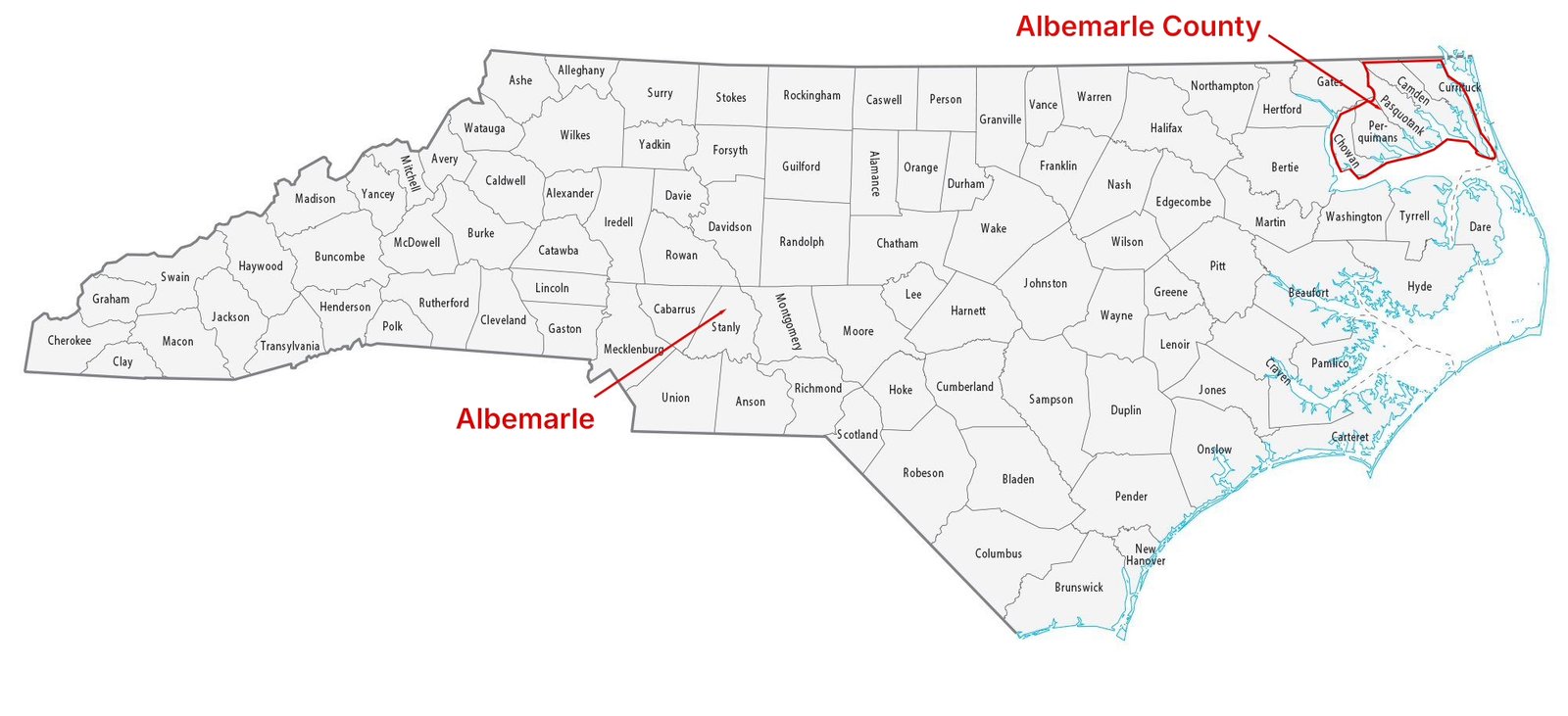
Albemarle vs. Albemarle County
~ SCALF FAMILY IN AMERICA ~
John Scarfe
by Stephen Scalf
John Scarfe’s Holdings, Pasquotank Precinct, Albemarle County
The first record we have of John Scarfe is his purchase of a 100-acre parcel of land in 1719 in the Albemarle region of Carolina
for the sum of 24 pounds (British currency). As Elmer D. Scalf pointed out in Chapter II of SCALF FAMILY HISTORY, The boundary separating Virginia from North Carolina was not established until 1735.
To avoid confusion, the location of Albemarle
requires some explanation. Today, Albemarle is the county seat of Stanly County in the south-central region of North Carolina. However, at the time of John Scarfe's purchase, Albemarle County was located in the northeastern portion of North Carolina, and was named for George Monck, the first Duke of Albemarle. The county was established in 1664 and was one of the original counties of the Province of Carolina. It was later divided into several smaller counties, including Chowan, Currituck, Pasquotank, and Perquimans. Of note, northeastern North Carolina is still referred to as the Albemarle region.
North Carolina
Albemarle vs. Albemarle County
As recorded in Pasquotank Deed Book A, 1700-1751, in 1719 John Scarfe purchased a 100-acre parcel of land on the southwest side of the Pasquotank River from John Smithson for £25 (British currency). Elmer D. Scalf notes that 50 acres of this land was sold to Thomas Taylor, Pasquotank County clerk on May 24, 1756. This parcel eventually became the site of Elizabeth City.
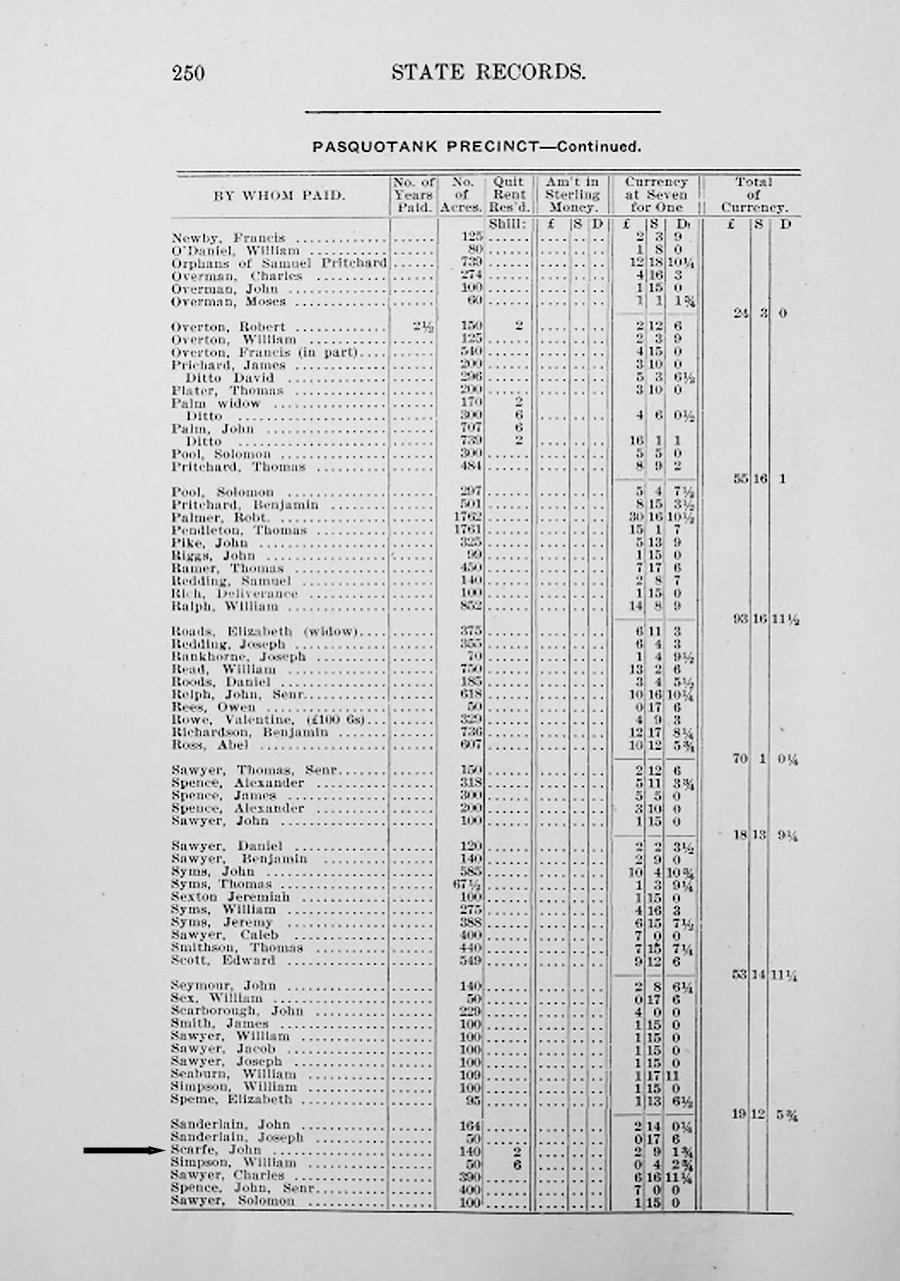
On November 4, 1727 John received a land grant of 140 acres from Governor Richard Everard and the other Carolina counselors, contingent upon John paying a yearly fee of one shilling for every 50 acres and requiring him to import one person for every 50 acres. Elmer did not provide a source document for the grant; however, colonial patents issued by Governor Everard are kept in the North Carolina land grant files in Raleigh, with the grants for 1727 recorded in Patent Book 3. This one shilling Quit Rent
fee that Henry P. Scalf referred to in Chapter III of CHRONICLES OF THE SCALF FAMILY appears in THE STATE RECORDS OF NORTH CAROLINA, Vol. 22, page 250. Apparently, John had been in arrears and made payment for two years at that time. 1735 Quit Rent Payment
While Elmer expresses remorse that this land was sold, at the time of the sale in
1756 it was part of a region known as The Great Dismal Swamp.
It wasn’t until 1763 when George
Washington and his brother formed the Adventurers for Draining the Dismal Swamp
company, which later became
the Dismal Swamp Land Company. Evenually, between the 140 miles of trenches and the digging of the Dismal Swamp
canal, the size of the swamp shrank from over 1 million acres to approximately 113,000 acres. The draining of the swamps caused tremendous ecological damage to the peat wetlands and the their wildlife. The Great Dismal Swamp National Wildlife Refuge was established on the remaining 113,000 acres on August 30, 1974. It wasn’t until 2012 that government hydrologists began "re-wetting" the land in an attempt to reverse the damage and to restore it to its natural state.
In other words, when John owned the land, it was very remote, heavily wooded, boggy acreage with primary access to the land achieved by boat on the Pasquotank River. When his son, James, sold the property, it had not yet been drained. He could not have foreseen how the landscape would eventually change.
John Scarfe’s Family
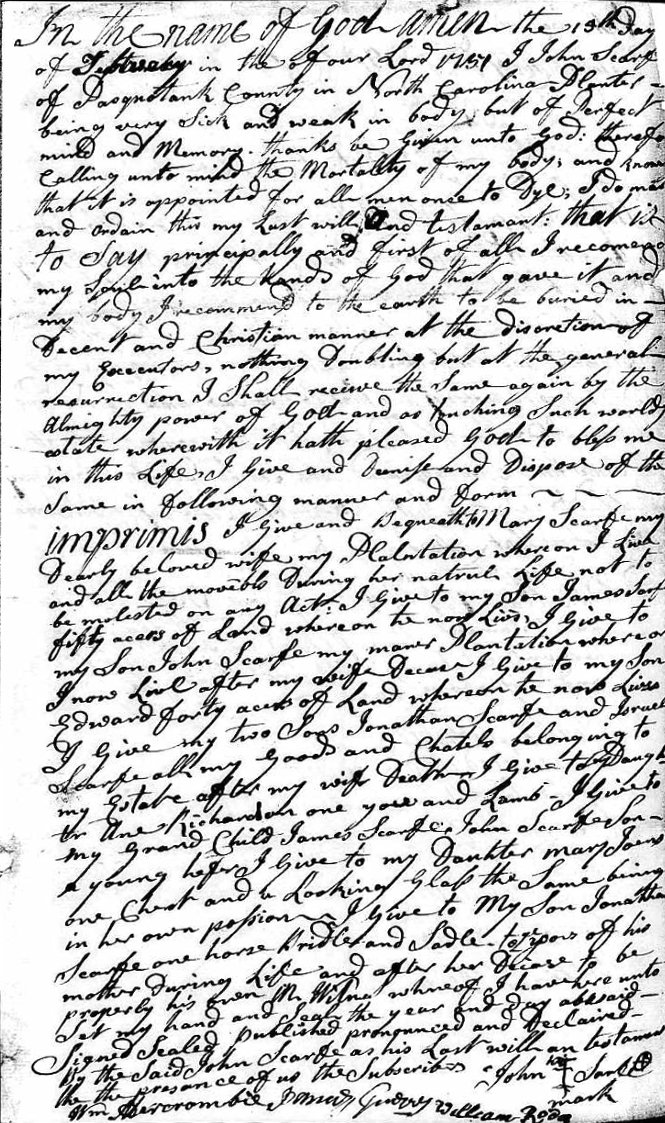
Much of what we know about John Scarfe and his family comes from his will, which was written on February 15, 1751. The transciption reads as follows: John Scarfe’s Will
In the name of God, Amen - the 15th day of February in the year of our Lord 1751. I, John Scarfe of Pasquotank County in North Carolina, Planter, being very sick and weak in body but of perfect mind and memory, thanks be given unto God: therefore, calling into mind the mortality of my body, and knowing that it is appointed for all men once to dye [sp]; I do make and ordain this my last will and testament: that is to say, principally and first of all, I recommend my soul into the hands of God that gave it and my body. I recommend to the earth to be buried in decent and Christian manner at the discretion of my executors, nothing doubting but at the general resurrection I shall receive the same again by the almighty power of God. And as touching such worldly estate wherewith it hath pleased God to bless me in this life, I give and [?] and dispose of the same in the following manner and form.
Imprimis, I give and bequeath to Mary Scarfe, my dearly beloved wife, my plantation whereon I live and all the movable during her natural life not to be molested on any act. I give to my son, James Scarfe, fifty acres of land whereon he now lives. I give to my son, John Scarfe, my manor plantation whereon I now live after my wife’s decease. I give to my son Edward forty acres of land wheron he now lives. I give my two sons, Jonathan Scarfe and Israel Scarfe, all my goods and chatels belonging to my estate after my wife’s death. I give to my daughter, Ann Richardson, one you [ewe] and lamb. I give to my grandchild, James Scarfe, John Scarfe’s son, a young heifer. I give to my daughter, Mary Jones, one chest and a looking glass the same being in her own possession. I give to my son, Jonathan Scarfe, one horse bridle and saddle to [?the use?] of his mother during life and after her decease to be properly his own. In witness whereof I have hereunto set my hand and seal the year and day aforesaid, signed, sealed, published, pronounced and declaired [sp] by the said John Scarfe as his last will and testament in the presence of us the subscribers: Wm Abercrombie, James Greves, William Rodes [punctuation added - red lettering to show relationships]
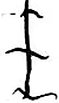 Scarfe (his mark)
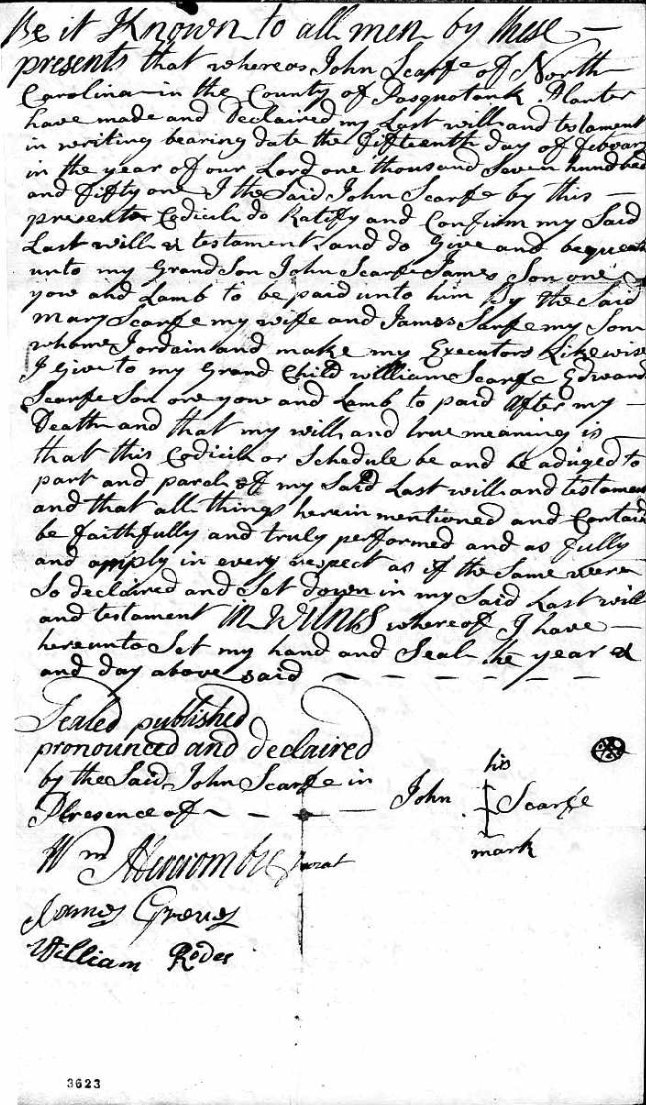
John then attached a codicil to his will. John Scarfe’s Codicil
Be it know to all men by these presents that whereas John Scarfe of North Carolina in the county of Pasquotank, Planter, have made and declared my last will and testament in writing, bearing the date the fifteenth day of February in the year of our Lord one thousand seven hundred and fifty-one, I the said John Scalfe by this present codicil do ratify and confirm my said last will and testament and do give and bequeath unto my grandson, John Scarfe, James’s son, one you [ewe] and lamb to be paid to him by the said Mary Scarfe, my wife, and James Scarfe, my son, whom I ordain and make my executors. Likewise I give to my grandchild, William Scarfe, Edward Scarfe’s son, one you [ewe] and lamb to be paid after my death, and that my will and true meaning is that this codicil or schedule be and be adjudged to part and parcel of my said last will and testament, and that all things herein mentioned and contained be faithfully and truly performed and as fully and amply in every respect as if the same were so declaimed and set down in my said last will and testament. In witness whereof I have hereunto set my and and seal the year and day above said.
Sealed, published, pronounced and declaired [sp] by the said John Scarfe in the presence of Wm Abercrombie, James Greves, William Rodes [punctuation added - red lettering to show relationships]
Scarfe (his mark)
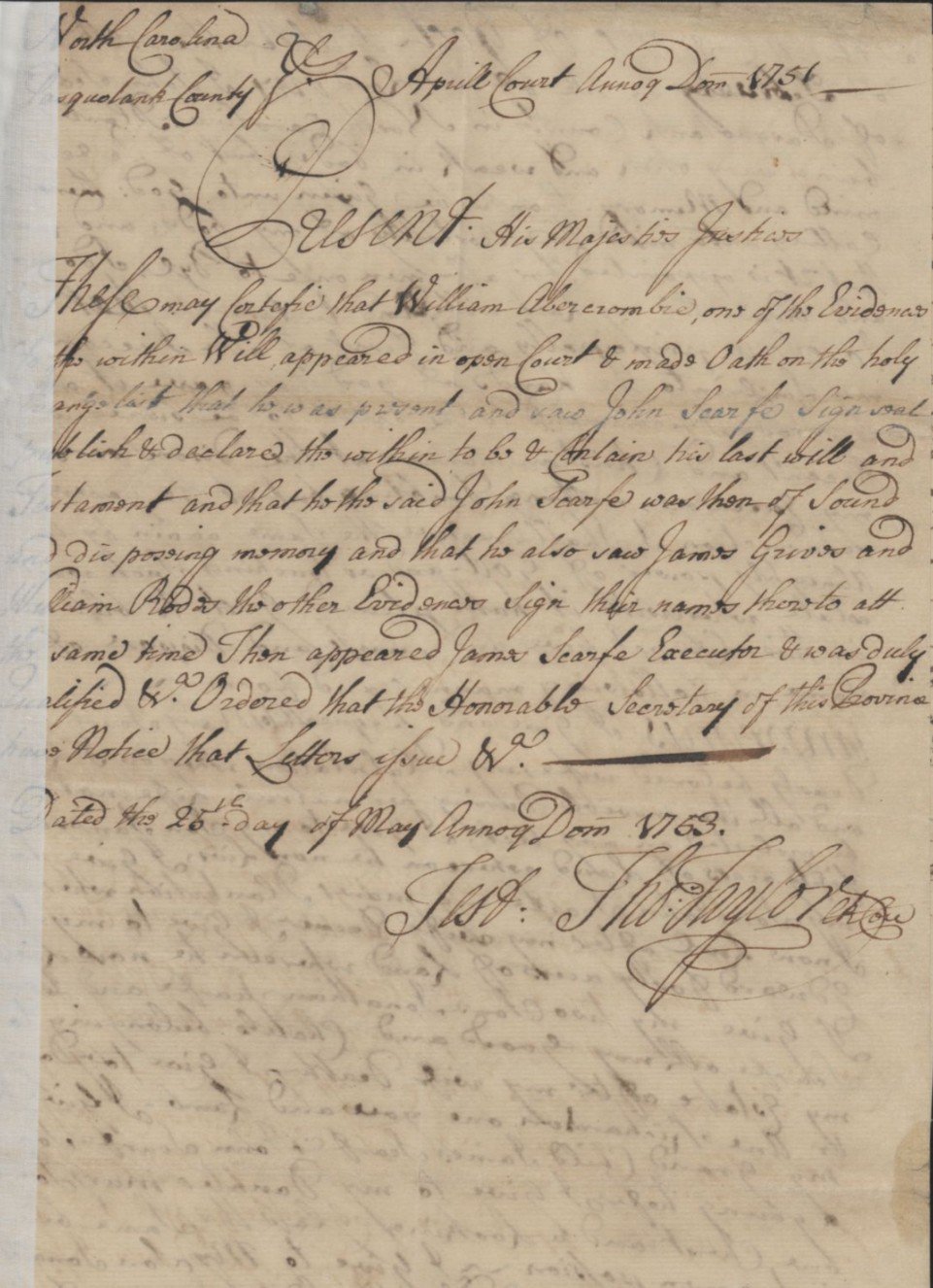
The will and codicil were probated on May 25, 1753 and signed by Thomas Taylor, clerk. Probate Record
From these and later documents we know the following about John Scarfe and his family:
Children of John Scarfe, Sr. and Mary Greves
From the will, we know John’s wife was Mary, but we are relying solely on Elmer’s research for her maiden name, Greves. Unfortunately, he did not provide any documentation of how he identified her. However, it makes sense, since James Greves, the presumed father of Mary Greves, owned land that bordered John’s property (the land willed to his grandson, John, son of John Scarfe, his second son). James Greves was also one of the witnesses to John Scarfe's will. Although we can’t validate Elmer’s statements without documentation, on the basis of his reputation for careful research I will accept his identification of Mary Greves as correct until proven otherwise.
John’s close association with James Greves opens up a possibility not explored by previous researchers:
I find it interesting that John would name two of his sons John and Jonathan, and that these were considered different names. I know several men whose first name is Jonathan, and who go by John or Jon (they are both pronounced the same way). It isn't always easy to distinguish between the two names in historical records.
Common abbreviations:
However, in the case of John and Jonathan, the use of abbreviations or shortened forms of Jonathan aren’t always consistent. It makes tracking their lineage much more challenging.
The problem is even greater when the same name appears in multiple genrations - and sometimes even multiple times withint the same generation - such as same-named first cousins. Here, we have a clear example of this: This chapter begins with John Scarfe who named his second son John Scarfe. His first son, James, named his first son John Scarfe, and his brother, John Scarfe, also name his son John Scarfe. Unfortunately, the existing documents are inconsistent with their surnames. They appear alternately as Scarfe, Scaff, or Scalf - and frequently as some other variation. Great care must be taken when researching these individuals to ensure documents (and family relationships) are associated with the correct person.
As a result, although I have taken great care to keep the John Scarfe/Scaff/Scalf individuals associated correctly, I readily admit that in spite of my best efforts, I may have made mistakes. If you find any errors, please let me know.